
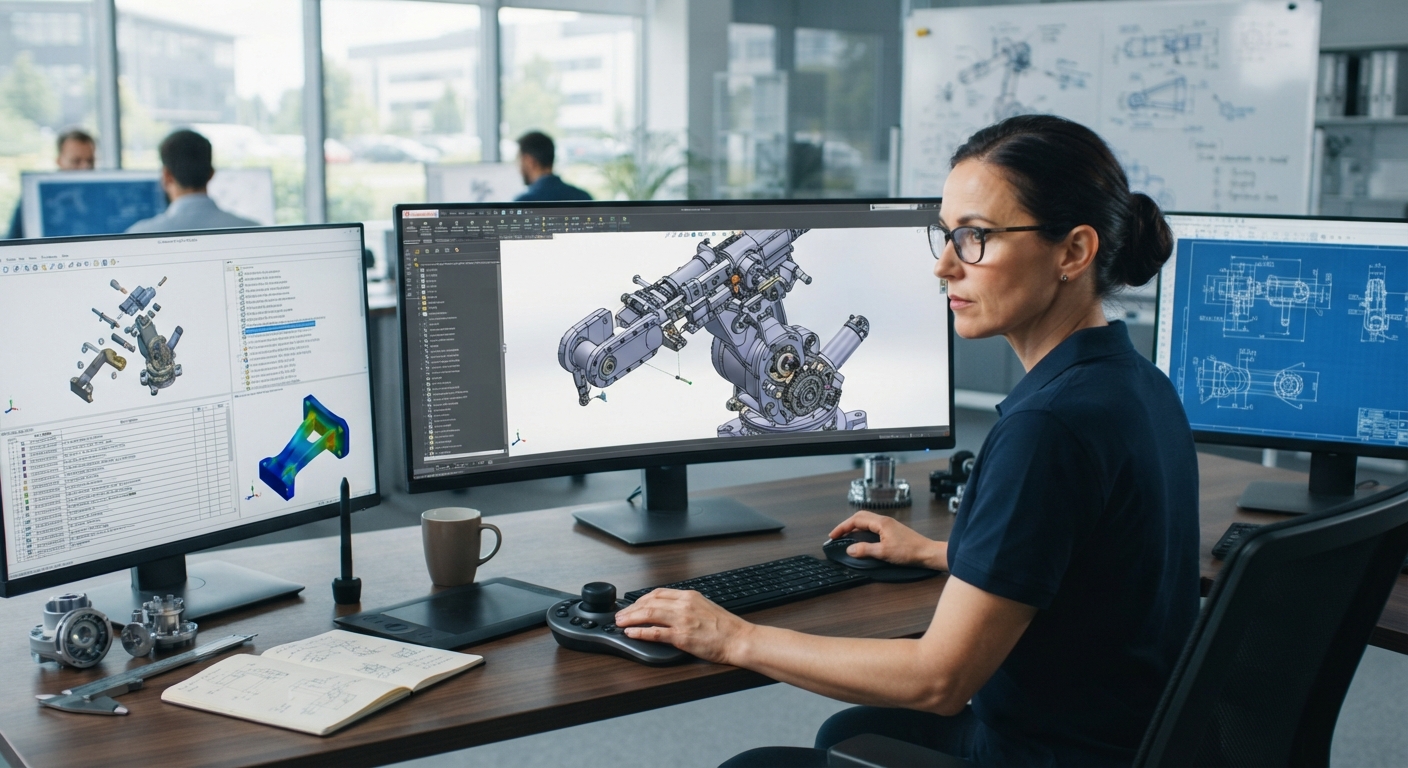
Modern engineering applications often need to work with CAD models created in different software environments. Manually opening, converting, and exporting every file can consume valuable development time, particularly when projects involve large numbers of models. Reliable cad converter software can help automate these processes, allowing applications to handle CAD data more efficiently while supporting different file formats and engineering workflows.
Automation is especially useful when CAD import and export are recurring parts of an application. Instead of requiring users to manage every conversion manually, developers can incorporate conversion capabilities into established workflows. This can improve consistency, reduce repetitive tasks, and make it easier to process engineering data at scale.
Why Automate CAD Model Conversion?
Manual conversion may be practical for occasional file transfers, but it becomes less efficient when an organization processes hundreds or thousands of models. Repetitive tasks can increase the possibility of inconsistent settings or user errors.
Automated conversion can establish a repeatable process. Applications can receive source files, process them according to predefined requirements, and generate output files in the formats needed by downstream systems.
This approach can be particularly useful for engineering companies that exchange models regularly with customers, suppliers, manufacturing systems, or internal departments.
Supporting Multiple File Formats
One of the main requirements for automated CAD processing is format compatibility. Engineering teams often encounter a mixture of proprietary and neutral file types.
A conversion solution should support the formats relevant to the application's workflow. Developers should consider both import and export requirements because an application may need to read models from several sources and produce files for different destinations.
Broad format support can make an automated system more flexible and reduce the need to maintain separate tools for individual file types.
Handling Complex Engineering Models
Automation does not remove the need for reliable model processing. CAD files can contain detailed solids, surfaces, curves, assemblies, and other engineering information.
A conversion workflow should therefore be tested with realistic models. Simple parts may convert successfully while more complex assemblies expose limitations in geometry processing or data organization.
Developers should evaluate how the conversion technology handles large models and whether the resulting data remains suitable for the application's intended purpose.
Automating Import Workflows
Automated import can help applications process incoming CAD data without requiring users to convert files manually beforehand. For example, an engineering application may receive models from different sources and need to transform them into an internal representation.
A consistent import process can help standardize how external CAD data enters the application. It may also make it easier to build workflows around model inspection, analysis, visualization, or further engineering operations.
Error handling is important at this stage. The application should be able to identify files that cannot be processed successfully and provide useful information for troubleshooting.
Automating Export Workflows
Export automation is equally important when engineering applications need to share models with other systems. Users may need to generate files in specific formats for manufacturing, collaboration, review, or downstream processing.
Automated export can reduce repetitive manual steps and help ensure that files are generated consistently. Developers can establish appropriate conversion settings and integrate export into broader application workflows.
This can be particularly valuable when multiple output formats are required for different customers or engineering partners.
Performance and Scalability
Processing a single CAD model is different from processing a large collection of files. Automated systems need to handle workloads efficiently, especially when conversion occurs as part of a larger service or batch-processing operation.
Developers should evaluate processing speed, memory requirements, and behavior with large assemblies. Scalability testing can help identify potential bottlenecks before an automated workflow is deployed more widely.
Validation and Quality Control
Automation should still include appropriate validation. After conversion, applications may need to verify that files were created successfully and that important model information is available.
The exact checks depend on the workflow. Geometry, component counts, file accessibility, and other relevant properties can be reviewed according to project requirements.
Building a Reliable Automated Workflow
CAD conversion software can become a useful component of automated engineering applications when it is selected and implemented carefully. Format support, geometry processing, import and export capabilities, error handling, performance, and validation all deserve consideration.
By automating repetitive model translation tasks, engineering teams can reduce manual file handling and establish more consistent data exchange processes. With suitable testing and quality controls, automated CAD conversion can support applications that need to process diverse engineering models efficiently and reliably. CAD Format Conversion Workflows for Modern Engineering Teams.
#EngineeringDevelopment #GeometricKernel